
Shot Peening Treatment for Springs
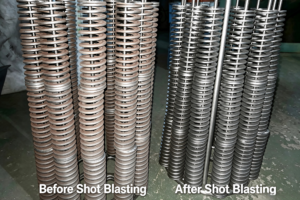 In precision mechanical manufacturing, springs serve as indispensable elastic core components that support the stable operation of countless industrial and commercial devices. From automotive suspension systems and aerospace precision equipment to medical instruments, smart electronics, and automated industrial machinery, springs endure continuous cyclic loads, alternating stress, and complex environmental erosion throughout their service cycle. Fatigue fracture, stress corrosion failure, and surface wear are the three most common defects that shorten spring service life and compromise mechanical system safety. Among all surface strengthening technologies for metal springs, shot peening treatment stands out as the most reliable, cost-effective, and industrially verified cold working process. Compliant with the latest ISO industrial standards, shot peening has become a mandatory post-processing procedure for high-performance custom springs, effectively solving inherent material defects and performance bottlenecks of spring products. This in-depth professional guide elaborates on the core principles, standardized workflows, technical classifications, practical benefits, quality inspection standards, industrial applications, and process optimization methods of spring shot peening, aiming to provide authoritative technical references for mechanical engineers, procurement specialists, and spring manufacturing practitioners.
ChinaCustomSpring is a professional custom compression spring, torsion spring and wire forming parts manufacturer in China. Focusing on high-precision and high-durability spring customization services, the company strictly implements international standardized shot peening treatment processes for all high-load, long-service-life spring products. By combining advanced shot peening equipment, mature process formulas, and rigorous quality inspection systems, ChinaCustomSpring ensures that every customized compression spring, torsion spring, and special-shaped wire forming part achieves optimal surface mechanical properties, fully meeting the strict performance requirements of global high-end industrial equipment under complex working conditions.
1. Overview and Core Working Principle of Spring Shot Peening
1.1 Authoritative Industrial Definition of Shot Peening
Defined by the latest international standard ISO 26910-1:2023 (Springs — Shot peening), shot peening is a precise cold working surface strengthening technology that utilizes high-velocity streams of near-spherical hard particles to uniformly impact the surface of metal components. Unlike traditional surface polishing, grinding, or derusting processes that only achieve surface beautification and impurity removal, shot peening focuses on modifying the microscopic structure and mechanical stress state of the spring’s surface material. The core purpose of this process is to form a uniform, dense residual compressive stress layer on the spring surface and realize surface work hardening, thereby fundamentally improving the fatigue strength, wear resistance, and stress corrosion cracking resistance of spring components. This standardized definition distinguishes professional shot peening strengthening from ordinary surface cleaning, clarifying its irreplaceable value in high-quality spring manufacturing.
1.2 Microscopic and Macroscopic Working Mechanism
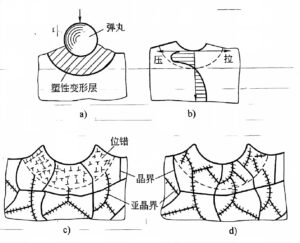
The working logic of spring shot peening is based on kinetic energy conversion and plastic deformation of metal materials. Professional shot peening equipment ejects standardized peening media including steel shot, cut wire shot, glass shot, and ceramic shot at a stable velocity ranging from 50m/s to 150m/s. A large number of spherical particles continuously and evenly impact the entire surface of the spring coil, torsion arm, and wire forming structure, forming countless tiny, non-damaging indentations. These densely distributed overlapping indentations form a uniform plastic deformation layer on the spring surface without changing the overall dimensional accuracy and structural integrity of the spring.
From a microscopic material perspective, the plastic deformation generated by shot impact refines the coarse metal grain structure on the spring surface, closes tiny microscopic defects such as processing scratches, surface pores, and grain gaps formed during spring winding, heat treatment, and trimming. The most critical technical effect is the formation of stable residual compressive stress in the surface layer. Under actual working conditions, springs are subjected to alternating tensile stress generated by cyclic compression, torsion, and bending loads. Tensile stress is the primary cause of fatigue crack initiation and propagation in metal materials. The residual compressive stress formed by shot peening can effectively offset the working tensile stress, suppress crack growth, and build a stable stress protection barrier for the spring.
In contrast, untreated ordinary springs retain surface tensile stress after processing. Tiny surface defects will continuously expand under long-term cyclic load, eventually leading to sudden fatigue fracture and equipment failure. Industrial experimental data verifies that standardized shot peening treatment can completely reverse the surface stress state of springs, drastically reducing the probability of fatigue failure and extending the overall service life of spring products.
2. Standardized Complete Workflow of Spring Shot Peening Treatment
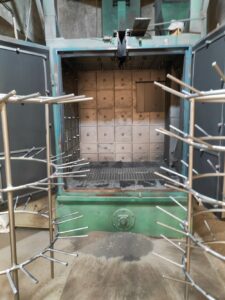
Spring shot peening is a systematic and standardized production process rather than a single independent operation. It must be accurately matched with the front-end heat treatment, setting treatment, and back-end finishing and anti-corrosion processes of springs. Any irregular operation in the workflow will directly weaken the strengthening effect and even cause product performance defects. The complete industrial shot peening workflow includes five core links: pre-treatment preparation, peening media selection and inspection, process parameter debugging, formal shot peening operation, and post-peening cleaning and quality testing.
2.1 Strict Pre-Treatment Preparation
Pre-treatment is the foundation of high-quality shot peening, determining the uniformity and stability of the final strengthening effect. According to ISO industrial specifications, shot peening must be carried out after spring quenching and tempering heat treatment and permanent setting treatment, and before surface electroplating, spraying, and anti-corrosion coating. The reason for this strict sequence is that high-temperature heat treatment will eliminate the residual compressive stress formed by shot peening, while post-peening setting deformation will destroy the uniform surface strengthening layer. Meanwhile, anti-corrosion coating will isolate the metal surface and prevent effective shot impact.
Before shot peening, all springs must undergo thorough surface cleaning to remove oil stains, rust spots, oxide scale, and processing sundries. Residual oil and attachments will buffer the impact kinetic energy of shot particles, resulting in uneven peening coverage and local stress blind areas. For customized high-precision compression springs, high-toughness torsion springs, and complex wire forming parts, professional manufacturers will classify products according to wire diameter, coil size, material hardness, and load working conditions to formulate personalized pre-treatment and peening schemes, ensuring targeted strengthening effects for different types of spring products.
2.2 Scientific Selection of Peening Media
Peening media is the core consumable that determines the strengthening quality of shot peening. The particle size, hardness, roundness, and material uniformity of the media directly affect the Almen intensity, coverage rate, and residual stress value of the finished spring. Industrial mainstream peening media is divided into three categories, each with fixed applicable scenarios for spring manufacturing.
Steel shot and high-roundness cut wire shot are the most widely used media in spring industrial production. Featuring moderate hardness, strong impact kinetic energy, and stable wear resistance, they are suitable for conventional carbon steel and alloy steel compression springs and torsion springs used in automobiles, engineering machinery, and general industrial equipment. Glass shot with fine particle size and low hardness is applied to thin-walled, small-wire-diameter precision springs and medical-grade wire forming parts, achieving gentle surface strengthening without damaging tiny structural dimensions and surface finish. Ceramic shot with ultra-high hardness and wear resistance is specially used for high-strength aerospace springs and extreme-condition industrial springs that require ultra-high fatigue resistance and structural stability.
To ensure consistent product quality in mass production, formal manufacturing requires strict screening of peening media to maintain uniform particle size and complete roundness. Manufacturers need to regularly replace broken, invalid particles to avoid mixed media causing uneven impact, surface scratches, and unqualified strengthening effects.
2.3 Precision Parameter Debugging and Formal Peening Operation
Professional spring shot peening relies on precise parameter control rather than blind operation. Core controllable parameters include shot ejection velocity, continuous peening time, media flow rate, spray distance, and surface coverage rate. Different spring specifications and application scenarios require targeted parameter matching to avoid insufficient strengthening or over-peening damage.
For heavy-load automotive suspension compression springs and engineering machinery bearing springs, high velocity and extended peening time are adopted to form a thicker and more stable residual compressive stress layer, adapting to long-term high-strength cyclic loads. For precision instrument springs and miniature wire forming parts, low-speed and short-time fine peening parameters are used to balance surface strengthening effect and product dimensional accuracy, preventing structural deformation and size deviation.
Coverage rate is the core quality index of shot peening, referring to the percentage of the spring surface covered by peening indentations. International industrial standards stipulate that conventional high-quality springs require a coverage rate of more than 100%, while key equipment springs used in aerospace and high-speed rail need to reach 150% to 200% coverage to eliminate all untreated dead angles. Modern professional spring manufacturers adopt fully automatic rotating fixture shot peening production lines, realizing 360° all-round uniform peening for spring coils, torsion arms, and complex wire forming structures, completely solving the problem of uneven local treatment in traditional manual and semi-automatic equipment.
2.4 Post-Peening Cleaning and Standard Quality Inspection
After the completion of shot peening, a large number of tiny residual shot particles and metal dust will adhere to the spring surface and structural gaps. Residual sundries will affect spring assembly accuracy, cause equipment friction and abrasion, and even lead to mechanical failure. Therefore, post-peening cleaning is an essential process link. According to product precision requirements, manufacturers adopt compressed air purging, ultrasonic cleaning, or vibration cleaning processes to thoroughly remove surface residual media and dust, ensuring clean and smooth spring surfaces.
After cleaning, all products will enter a strict quality inspection stage, including surface morphology visual inspection, Almen intensity testing, residual stress detection, surface roughness measurement, and fatigue performance sampling verification. Only products that meet ISO and AMS international standard parameters can enter the subsequent packaging and delivery links, ensuring the stability and reliability of batch product performance.
3. Three Core Types of Spring Shot Peening Technology
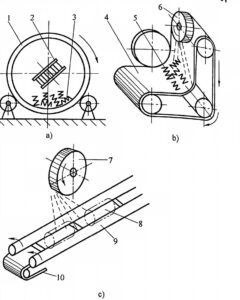
With the continuous upgrading of industrial manufacturing requirements, spring shot peening technology has evolved from basic conventional peening to multiple high-precision differentiated processes, adapting to springs with different performance grades and application scenarios. At present, the three mainstream industrial shot peening technologies include conventional shot peening, strain shot peening, and rotary flap peening, each with unique technical advantages and applicable ranges.
3.1 Conventional Shot Peening
As the most basic and widely used standard strengthening process, conventional shot peening performs high-speed particle impact treatment on free-state springs. It forms a uniform residual compressive stress layer on the spring surface, effectively improving the basic fatigue resistance and surface hardness of spring products. This process is suitable for most industrial conventional compression springs, ordinary torsion springs, and general wire forming parts, with stable process performance and high cost performance. It can meet the performance requirements of most civil and general industrial equipment, and has become the standard supporting process for mass production of ordinary high-quality springs.
3.2 Strain Shot Peening (Stress Peening)
Strain shot peening is an upgraded high-performance strengthening process for high-end springs, which is fundamentally different from conventional free-state peening. This technology fixes the spring on a professional customized fixture to keep it in a pre-stressed stretched or compressed state during the peening process. Professional industrial test data shows that strain shot peening can increase the fatigue life of springs by more than 30% on the basis of conventional shot peening.
The pre-stressed working state makes the plastic deformation of the spring surface more sufficient and uniform, the formed residual compressive stress layer thicker and more stable, and the ability to resist alternating stress and stress corrosion significantly improved. This process is mainly applied to high-end precision springs in aerospace equipment, high-speed rail transit, precision engineering machinery, and military equipment with ultra-long service life and ultra-high stability requirements. The only limitation is that the process is complex, requiring single fixture positioning for each spring, resulting in a longer production cycle and higher manufacturing costs, so it is only used for high-performance customized spring products.
3.3 Rotary Flap Peening
Specified by the AMS 2590 international aviation standard, rotary flap peening is a high-precision, low-damage shot peening technology. Different from traditional free-flow shot spraying, it adopts bonded-shot rotary flap components for surface impact treatment. The process features high treatment precision, uniform strengthening effect, and minimal damage to product surface precision, making it especially suitable for complex-shaped special-shaped wire forming parts, irregular torsion springs, and miniature precision springs that are difficult to process with conventional equipment.
Rotary flap peening is widely used in the finishing and strengthening of medical equipment springs, electronic precision component springs, and instrument elastic parts, which can ensure the structural precision of special-shaped parts while improving fatigue resistance, solving the technical problem of difficult strengthening of complex wire forming parts.
4. Core Technical Advantages of Shot Peening for Spring Performance
4.1 Dramatically Improve Spring Fatigue Life
Fatigue fracture is the primary failure mode of springs in long-term service. Most springs need to bear millions of cyclic tensile, compressive, and torsional loads during operation. Tiny surface defects and tensile stress concentration points will continuously expand under alternating stress, eventually leading to sudden spring fracture and equipment shutdown. After standardized shot peening treatment, the surface residual compressive stress layer can effectively offset the working tensile stress, inhibit the initiation of fatigue cracks, and slow down crack propagation speed. Industrial verification shows that qualified shot peening can increase the fatigue life of alloy steel springs by 50% to 200%, which is the most prominent core advantage of this process.
4.2 Significantly Enhance Stress Corrosion Resistance
Many industrial springs work in harsh environments such as high humidity, salt spray, chemical corrosion, and high temperature. Under the combined action of tensile stress and corrosive media, springs are prone to stress corrosion cracking, which greatly shortens their service life. The dense plastic deformation layer formed by shot peening optimizes the surface microscopic structure of springs, closes surface gaps and defect holes, and blocks the penetration channel of corrosive media. At the same time, it eliminates the surface tensile stress concentration points that are most prone to corrosion failure, fundamentally improving the spring’s resistance to stress corrosion and adapting to outdoor machinery, marine equipment, and chemical industrial equipment working conditions.
4.3 Improve Surface Hardness and Wear Stability
The cold working effect of shot peening realizes uniform surface work hardening of springs, effectively improving the surface hardness and friction resistance of spring materials. For torsion springs used in mechanical transmission and wire forming parts with frequent friction and extrusion, shot peening can reduce surface friction loss, avoid product size deviation and elastic attenuation caused by long-term wear, and maintain the long-term stability of spring elastic performance and structural accuracy.
4.4 Eliminate Processing Defects and Improve Batch Consistency
In the processes of spring winding, heat treatment, cutting, and trimming, tiny processing scratches, burrs, and oxide defects are inevitably formed on the surface. These subtle invisible defects are the main inducement of early fatigue failure of springs. The uniform impact of shot particles can smooth surface micro defects, remove residual tiny burrs, and make the spring surface flat and uniform. For mass customized spring products, standardized shot peening process specifications can greatly reduce performance differences between different batches of products and improve the overall consistency and reliability of finished products.
5. International Industrial Standards and Professional Quality Control
To standardize the shot peening process and ensure stable product performance, the global spring manufacturing industry has formed a complete set of authoritative standard systems. Among them, ISO 26910-1:2023 is the core international standard for spring shot peening, which uniformly specifies process flow, media parameters, operation specifications, and quality evaluation criteria. In addition, the American aerospace industry standards AMS 2432 and AMS 2590 put forward higher precision and stricter parameter requirements for shot peening of high-end aerospace springs and precision parts.
The core detection indicators for shot peening quality include Almen intensity, surface coverage rate, residual compressive stress value, and surface roughness. Almen intensity reflects the impact energy and strengthening strength of shot peening; coverage rate ensures no untreated dead area on the spring surface; residual stress testing verifies whether the strengthening effect meets design standards; surface roughness detection ensures that the process does not damage the surface precision of products. Professional spring manufacturers must conduct full-item testing for each batch of products to ensure compliance with international industrial standards.
As a professional custom compression spring, torsion spring and wire forming parts manufacturer in China, ChinaCustomSpring fully abides by ISO and AMS international standard specifications in all shot peening production links. The company is equipped with professional Almen test gauges, high-precision residual stress detectors, and surface roughness testing instruments, realizing full-process monitoring from process parameter debugging, formal production to finished product inspection. This strict quality control system ensures that all customized spring products can meet the high-standard performance requirements of global industrial customers.
6. Industrial Application of Shot Peening in Custom Spring Products
6.1 Custom Compression Springs
Custom compression springs are the most widely used spring type in the industry, covering automobile chassis suspension, hydraulic equipment, household appliances, industrial automation machinery, and engineering equipment. Most compression springs bear long-term cyclic compression loads, and fatigue failure and permanent deformation are the main service risks. After professional shot peening strengthening, custom compression springs have stronger anti-fatigue ability and more stable elastic force, effectively avoiding elastic attenuation and structural failure in long-term operation. For heavy-load compression springs used in automobile manufacturing and engineering machinery, shot peening has become an indispensable standard production process.
6.2 Custom Torsion Springs
Custom torsion springs mainly bear cyclic torsional loads, and stress concentration is easily formed at the transition position between the torsion arm and the spring coil during operation, leading to local cracking and failure. Shot peening treatment can eliminate surface stress concentration defects, form a uniform compressive stress protection layer at stress-sensitive positions, and significantly improve the torsional fatigue resistance of torsion springs. It is widely applied in automobile steering systems, hardware fixtures, automated door and window equipment, and industrial transmission torsion springs, effectively extending the service life of torsion products.
6.3 Custom Wire Forming Parts
Custom wire forming parts are special-shaped elastic components processed by precise wire bending, with complex and changeable structures and numerous stress concentration points. The bending and forming process will produce uneven surface stress, which easily causes local fatigue damage and structural instability in service. Shot peening can balance the overall surface stress of special-shaped wire forming parts, repair microscopic defects generated during forming processing, and improve the structural stability and fatigue resistance of parts. It is widely used in medical equipment elastic parts, electronic precision components, and instrument wire forming products, providing reliable performance guarantee for high-precision equipment operation.
7. Common Process Misunderstandings and Professional Optimization Strategies
7.1 Common Industry Misunderstandings in Shot Peening
Many small and medium-sized spring manufacturers have cognitive and operational misunderstandings in shot peening application. The most common mistake is equating professional shot peening strengthening with ordinary surface derusting and cleaning, ignoring its core stress adjustment and material strengthening functions. Random process parameters, insufficient coverage rate, and irregular operation sequences lead to no obvious improvement in spring fatigue performance after treatment. In addition, excessive peening is another prominent problem. Excessively high shot velocity and ultra-long peening time will cause surface metal peeling, increased roughness, and reduced mechanical properties, resulting in counterproductive strengthening effects.
7.2 Scientific Process Optimization Strategies
To maximize the strengthening effect of shot peening, manufacturers need to formulate personalized process schemes based on spring material, wire diameter, structural characteristics, and service working conditions. For high-carbon steel springs with high hardness, medium-strength peening parameters are adopted to avoid surface damage; for stainless steel and alloy precision springs, high-precision fine peening is matched to ensure both strengthening effect and dimensional accuracy. At the same time, the production sequence must be strictly standardized to ensure that shot peening is carried out after heat treatment and before anti-corrosion coating, avoiding the failure of strengthening effect. Regular equipment maintenance and media screening can ensure the stability of batch processing quality and realize long-term stable optimization of spring product performance.
8. Conclusion
Shot peening treatment is a mature, efficient, and irreplaceable surface strengthening technology in the modern spring manufacturing industry. By refining surface metal microstructure and forming stable residual compressive stress layers, it fundamentally solves the core failure problems of fatigue fracture, stress corrosion, and surface wear of springs, greatly improving the service life and operational stability of custom spring products. With the continuous improvement of industrial manufacturing precision and equipment reliability requirements, shot peening technology has become a standard configuration for high-quality custom compression springs, torsion springs, and wire forming parts, and is an important symbol to distinguish high-end customized spring products from ordinary ordinary springs.
Professional and standardized shot peening technology is a key embodiment of the core manufacturing strength of spring enterprises. ChinaCustomSpring is a professional custom compression spring, torsion spring and wire forming parts manufacturer in China. Adhering to international advanced production concepts and strict quality standards, the company provides global customers with high-performance, long-life, and high-precision customized spring products through standardized shot peening processes and perfect quality inspection systems, helping all kinds of mechanical equipment achieve more stable, efficient, and long-term safe operation.


